Welcome to my Educational Adventures!
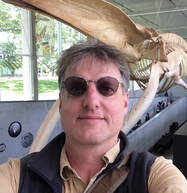
Here you will find information about some of the work and research I have or am currently involved in. My current research revolves around formal/informal science education, participant-based mobile learning and curriculum theory. More specifically, I am interested in the theory and practice of a critically empowering science and environmental education for students and future teachers. In addition to my professional CV, you can learn about the various research and service projects I am currently working on. I also maintain a blog on science education and the world. Here you can also find links to other individuals and organizations that share my research interests. Education is an adventure! Let's see what we can do together. You can reach me at: [email protected].
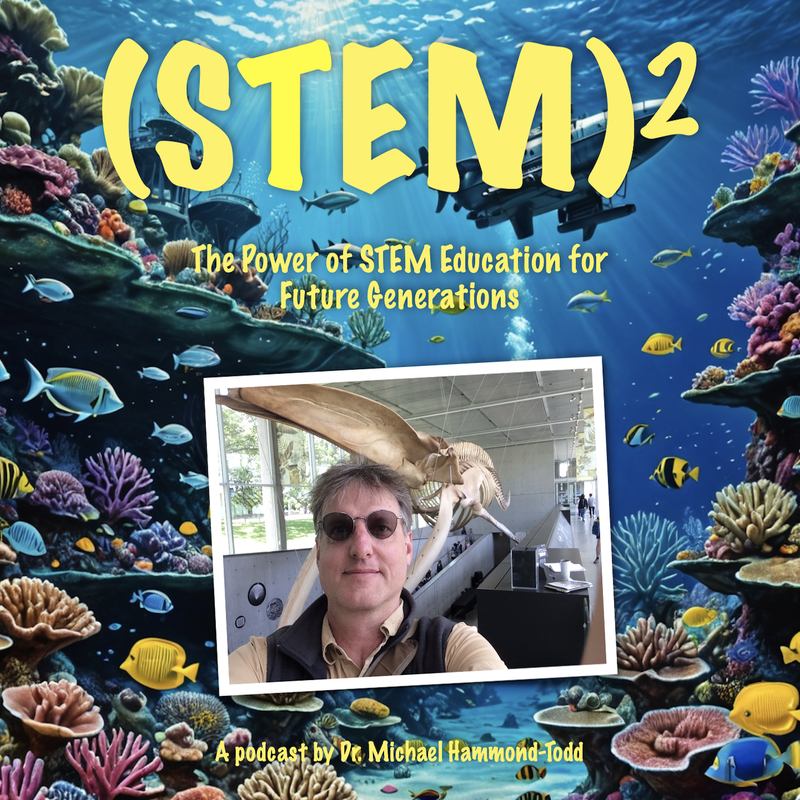
STEM Education
to the next power! 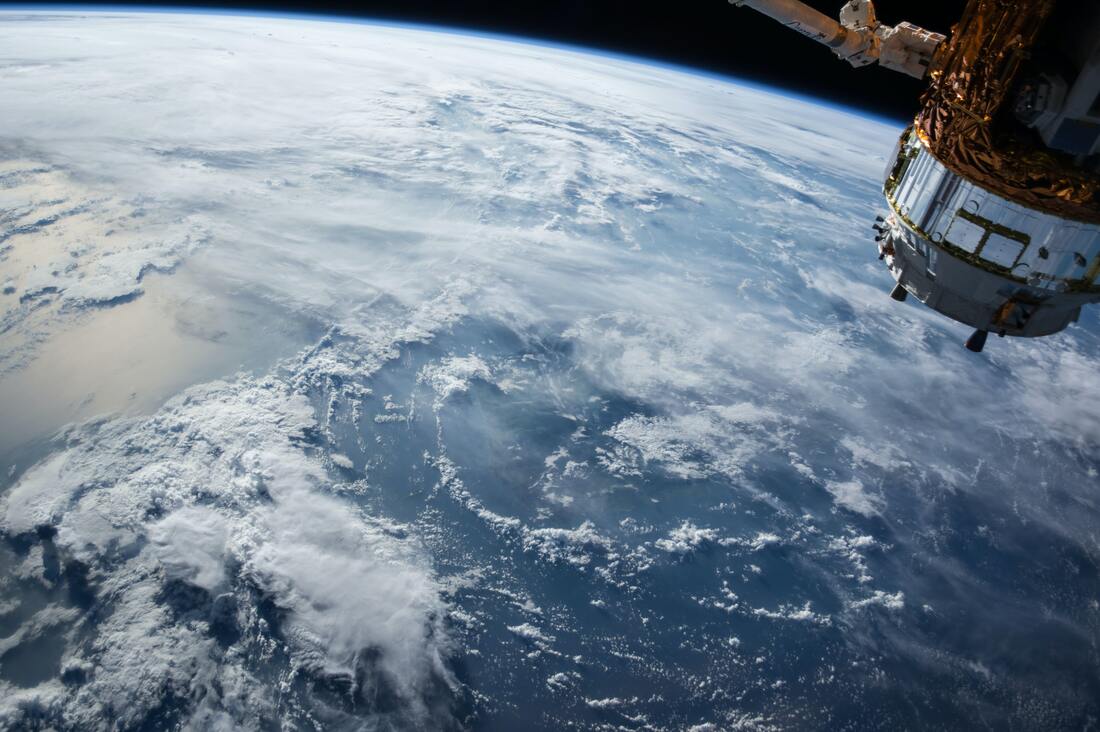
NASA Photo of ISS and Earth
Interested in getting involved?
(STEM)2 is looking for, volunteers educators, and STEM experts who are interested in helping develop the podcast series. For more information, contact (STEM)2 at the address below. |
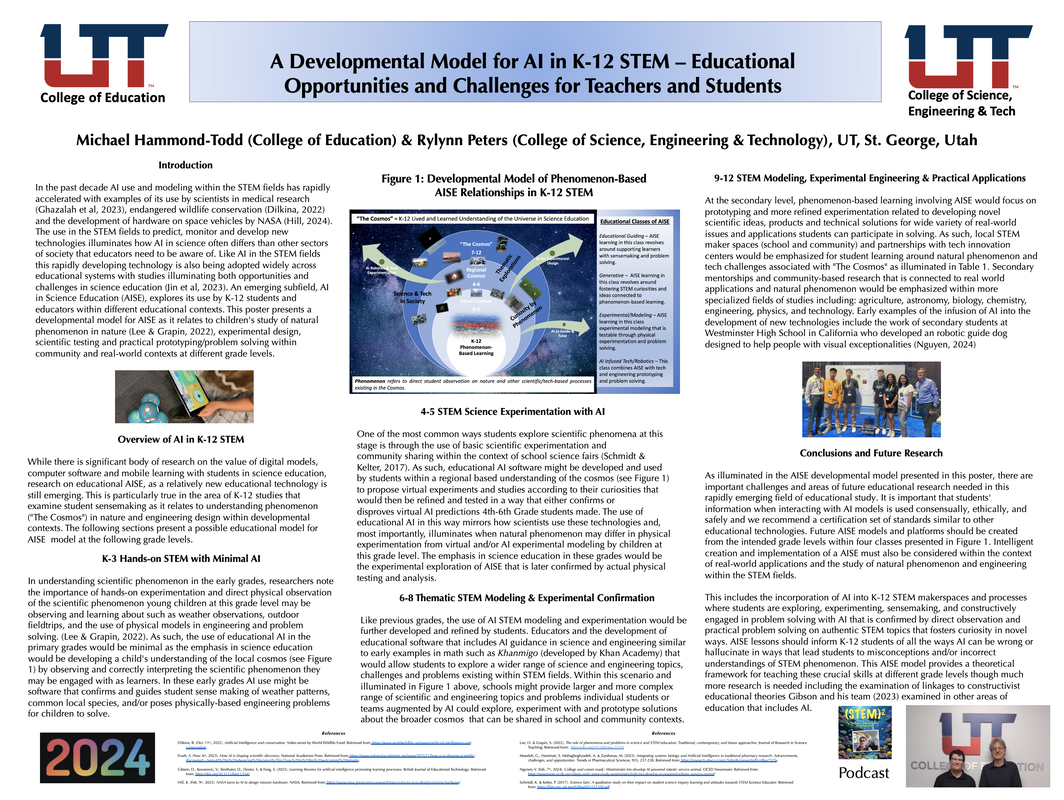
(STEM)2 Series 5 Podcast: Exploring a developmental model for AI in Phenomenon-Based K-12 Science Education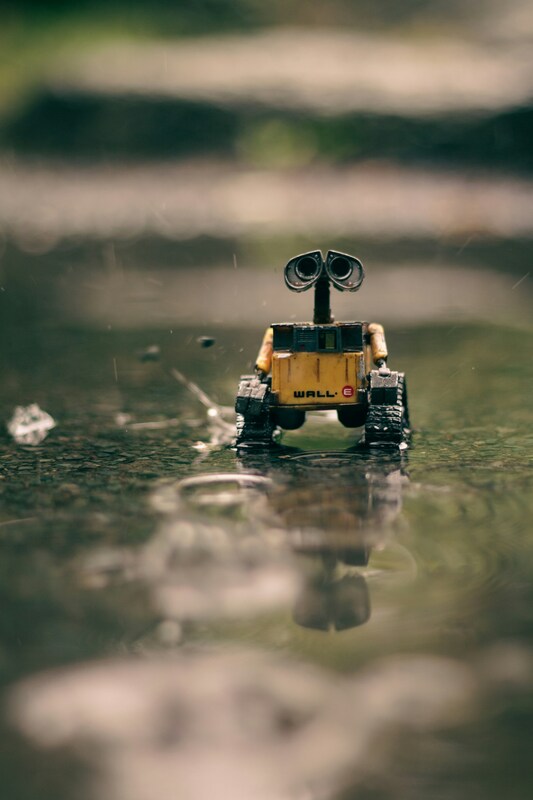
Photo by Eric McLean
Series 5 Episode 1: Exploring “The Cosmos” with K-12 Students Augmented by AI - A Developmental Model for Science Educators. In Episode 1 of our fifth series we start with a discussion on phenomenon-based learning in science education. Starting with real life examples of how science researchers and developers utilize AI in medical research, wildlife conservation, and the development of advanced tech (robotics and rockets), we examine how AI might be used with K-12 students within the context of augmented phenomenon based learning related to a child’s understanding of “The Cosmos”. A brief taxonomy of educational AI tech (some existing - others in development) is also presented. In STEM news we look at two ways scientists are utilizing AI to enhance public health (click here) and the conservation of endangered species (click here) and how NASE is using AI to construct hardware for space exploration (click here). (Podcast S5-E1)
Series 5 Episode 2: Use or not? What role should AI play in K-3 Science Education?: Episode 2 starts by noting the value of science learning for K-2 students on “hands-on” and directly observable phenomenon about the “Local Cosmos” as experienced by children in these grade levels. As a result digital and virtual learning with AI technologies plays a minimal role as the educational focus within these grades is to provide foundational awareness and experiences that encourage children to observe and explore natural phenomenon about their “Cosmic” experiences in nature and 3D tech building that is predominately mechanical rather than digital in nature. Educational AI, when utilized by children (and ideally their families as most observable phenomenon and natural environments are explored outside of school) is utilized as a guide and/or tutor to help children better understand what they arre observing in nature or their “Local Cosmos”. A model for future development in educational tech for these grades is presented. In the news, we will be discussing outdoor field guides (click here) and simple engineering activities children might do with their families together. (Podcast S5-E2) Series 5 Episode 3: Science Fairs and Experimentation with 3-5 Grade Students - Using AI for Phenomenon-Based Experimentation That Includes Authentic Testing and Critical Analysis: What role does AI play in the elementary school science fair? In Episode 3, we explore how the science fair might be transformed and enhanced by allowing students to utilize educational AI to explore experimental ideas which are then tested by the students to evaluate, confirm and/or further refine student ideas about the relationship between AI experimentation/modelling and actual physical testing and experimentation. Within this context, 3-6 Grade students participating in science fair might choose to create experiments independent of AI or augment experimentation using educational AI similar to the way scientists utilize both of these methods within science research and tech innovation. Like the previous episode, a model for future development in educational tech for 3-5 Grades is presented. In the news, we will be discussing AI based science experiments elementary students can use for experimentation from Science Buddies (click here) and the value of science fiction as it relates to student understanding (click here). (Podcast S5-E3) Series 5 Episode 4: Thematic Experimentation and Prototyping with 6-8 Grade Students - Using AI for Thematic Problem Solving and Experimentation in STEM: What role does AI play in early secondary education? In Episode 4, we begin exploring AISE at the secondary levels in Grades 7-9 by introducing a forth class and educational model of science education that includes AI modelling and early prototyping of STEM tech that includes early AI coding and other elements. Secondary AISE also explores how lessons, topics and ideas beyond the local and regional cosmos that is more evident in elementary AISE. Working individually and in teams, students utilize AI in thematic lessons and/or problem-based learning that includes prototyping physical technology and robotics for community sharing at events such as an AI-linked robotics and other technical leagues and challenges (similar to Lego Robotics). In the news, we look at some of the early research into AI (click here), a new AI ethics curriculum for middle schoolers from MIT (click here) and share a website that utilizes Lego Robotics and AI (click here). (Podcast S5-E4) Series 5 Episode 6: Science Research and Innovation for 9-12 Grade Students within Community and Real-World Contexts - Using AI for Science Research Experimentation and Tech Prototyping That Includes Practical and/or Real World Applications: What role does AI play Grades 9-12? Episode currently in production. (Coming Soon) Series 5 Bonus Episode 5: Earth Day 2024 - How Can AI Protect Wildlife and Teach Families About Nature? Earth Day special education we look at ways AI is being utilized by scientists and wildlife experts to protect rare and endangered species around the world (click here). We also examine how NASA is utilizing AI to better predict extreme weather in order to help local communities (click here). The main part of our show explores a theoretical model of dynamic interpretive software that helps children in the primary grades learn about nature and environmental topics in local and regional contexts. Should AI be utilized in outdoor science and environmental education programs? Let us know by contacting us at [email protected]. (Podcast S5E5) Series 5 Episode 6: Bonus Episode - Cicadas in North America In this bonus episode, we look at the rare emergence of two broods of cicadas in North America and how this rare double emergence of Broods 13 and 17 has not been seen in over two centuries. As trillions of noisy cicadas complete their life cycle, we discuss the benefits to ecosystems and share articles on how people celebrate cicadas around the world. In the news we share articles on Broods 13 and 17 (click here) and National Geographic resources four kids and schools (click here and click here). (Podcast S5E6) |
Coming to (STEM)2 Podcast in April 2024 - Earth Day and AI??
Click here to listen to the first four series of the (STEM)2 podcast.
We are developing SERIES 2 of the (STEM)2 podcast. Feel free to share your thoughts and ideas here: [email protected]